Structured data explained
How to check breadcrumb schema?
Check breadcrumb syntax, properties, real destinations and the deployed URL. Separate valid markup from indexing and search-result appearance.
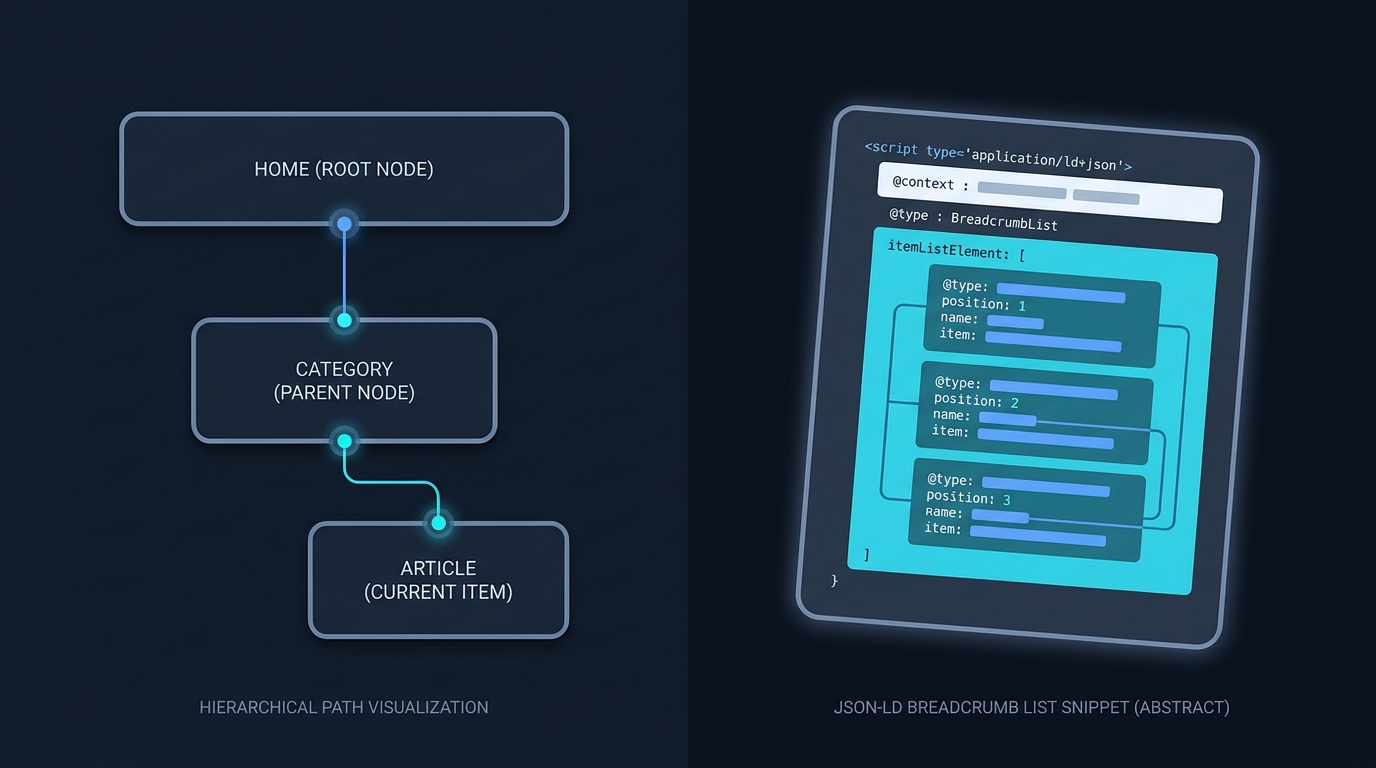
Check breadcrumb schema in three layers: valid syntax, a correct BreadcrumbList model, and the markup actually delivered on the page. Use Google’s breadcrumb documentation and its linked Rich Results Test for Google eligibility. A successful test does not mean the page has been indexed or that a breadcrumb result will appear.
Find what the page actually publishes
Open the public URL and inspect the HTML, including the rendered DOM if JavaScript adds the markup. JSON-LD is one supported format; Google also documents Microdata and RDFa. A page can contain several structured-data scripts or a graph containing multiple entities. There is no universal rule that all schema must occupy one script tag.
For a JSON-LD implementation, identify the BreadcrumbList object, whether it appears alone or inside @graph. Copy only valid JSON into a syntax checker. Check quotes, commas and brackets first. Pasting an entire HTML script element into a plain JSON parser produces a different problem from malformed JSON inside that script.
{
  "@context": "https://schema.org",
  "@type": "BreadcrumbList",
  "itemListElement": [
    {
      "@type": "ListItem",
      "position": 1,
      "name": "Home",
      "item": "https://example.com/"
    },
    {
      "@type": "ListItem",
      "position": 2,
      "name": "Articles",
      "item": "https://example.com/articles/"
    },
    {
      "@type": "ListItem",
      "position": 3,
      "name": "Breadcrumb navigation"
    }
  ]
}
This fictional example uses three ordered items and omits the last item’s URL. Google permits omitting item for the final list item, where it uses the containing page’s URL. Intermediate items need their correct destinations. Replace the example domain and labels with the actual hierarchy before using it.
Validate the model and destinations
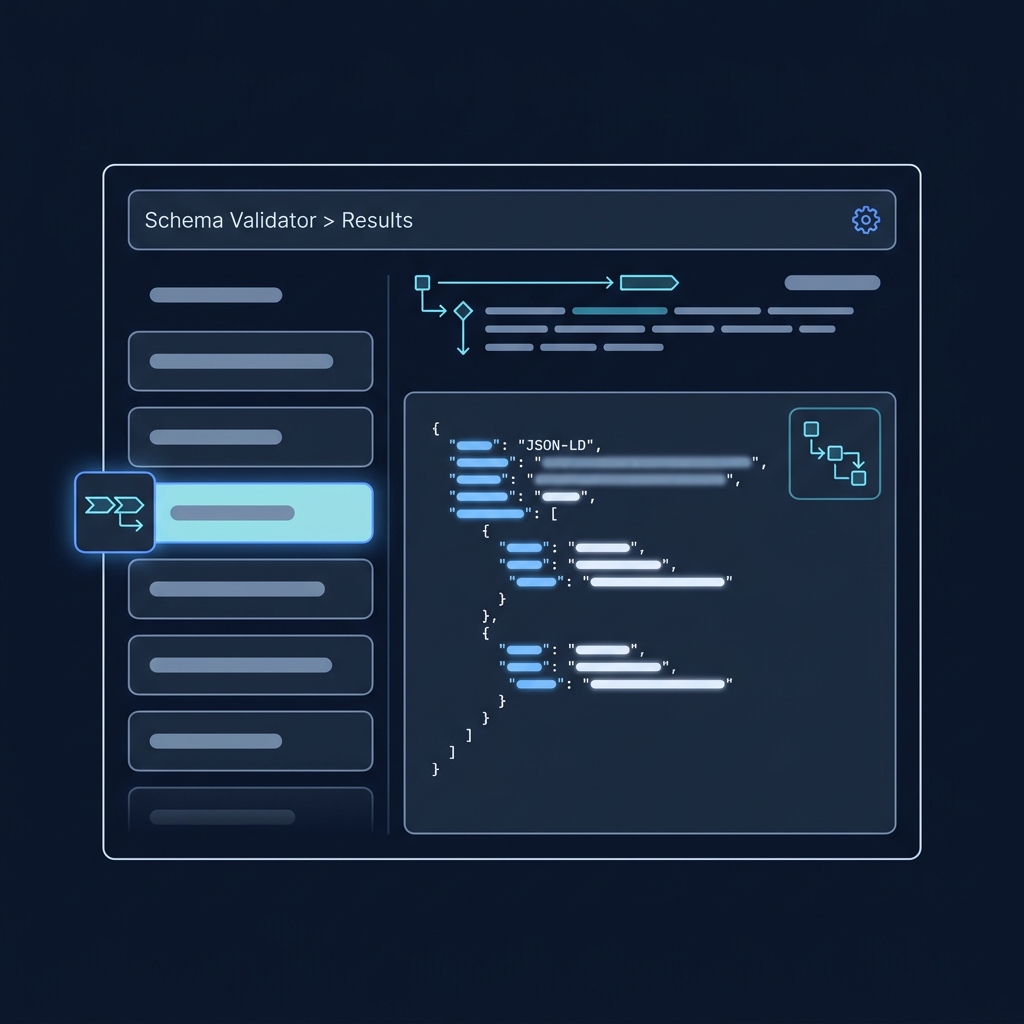
Google requires at least two list items for this feature. Check each item’s type, name and integer position, with a clear sequence starting at one. Resolve intermediate URLs and confirm they lead to the intended pages. A string that looks like a URL is not proof the destination exists.
Compare the trail with the visible navigation and the page’s purpose. Do not insert unrelated keyword pages merely to add another level. If the page legitimately has more than one hierarchy, Google documents multiple breadcrumb trails; each must make sense independently.
Test the deployed URL
Use the Rich Results Test’s URL mode to see what Google’s test can retrieve and detect. Its code mode is useful while developing, but it does not prove that production publishes the same markup. A general Schema.org validator can provide a broader vocabulary check; it does not replace Google’s feature-specific requirements.
Read the reported issue and affected item before editing the template. Missing names, malformed JSON and stale destinations need different repairs. Re-run the test after deployment, including a page from each template affected by the change.
Separate successful testing from search appearance
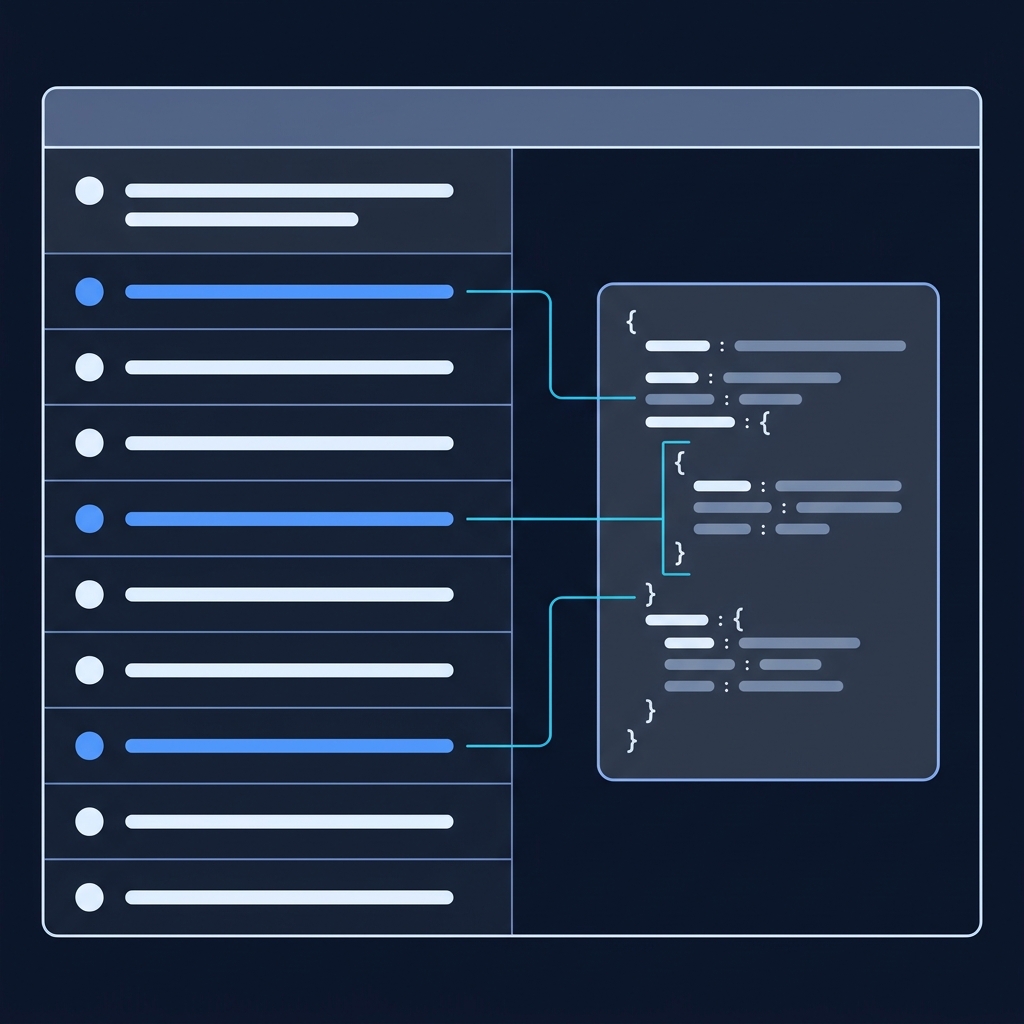
Google’s current breadcrumb feature is available on desktop. Passing the test does not promise a mobile display, immediate recrawling or improved ranking. Use Search Console URL Inspection for Google’s view of the page and available enhancement reporting for detected issues. Crawling and reporting can lag behind a successful live deployment.
Keep a small regression set: short titles, long titles, a moved category and a nested page. Retesting those after template changes helps catch accidental duplication or broken parents before it affects the whole archive.
Put this into practice
Keep the deployed URL, detected breadcrumb trail and reported issue together when recording a check. Re-test production after a fix; a pasted example can pass while the published template still emits older markup.
Check before publishing
Related guides

If the goal is broader search visibility, My AI Search Report explains what answer-engine tools can and cannot measure. Valid breadcrumbs alone do not demonstrate a citation. What are the best tools for answer engine optimization?.